


Faith Still Teaches: Catholic Education Remains the Backbone of Bougainville

BUKA, Autonomous Region of Bougainville — In a region still healing from a decade of conflict, still rebuilding roads, wharves and trust, one institution has never left the classroom: the Catholic Church.
Today, eighty percent of all schools in the Autonomous Region of Bougainville are Catholic Agency Schools. It is more than a statistic; it is a story of faith, education and healing remaining together.
That reality was presented by Mrs. Joyceanne Pinoko, Catholic Education Secretary of the Diocese of Bougainville, whom I met in Port Moresby on 2 September 2026, in her fifth year in office after many years of service as a teacher.
A Footprint of Faith
The Catholic Education Agency of the Diocese of Bougainville currently administers:
• More than 300 Elementary and Early Childhood schools;
• 174 operating Primary Schools in 2026, up from 164 registered Primary Schools in 2025;
• Four Catholic High Schools and two Secondary Schools;
• Six Catholic-run Technical Vocational Education and Training (TVET) institutions, plus one other institution in the region.
A total of 1,307 Catholic agency teachers are in service:
• Primary: 1,144 [420 male, 724 female];
• High School: 56;
• Secondary: 70;
• TVET: 37.
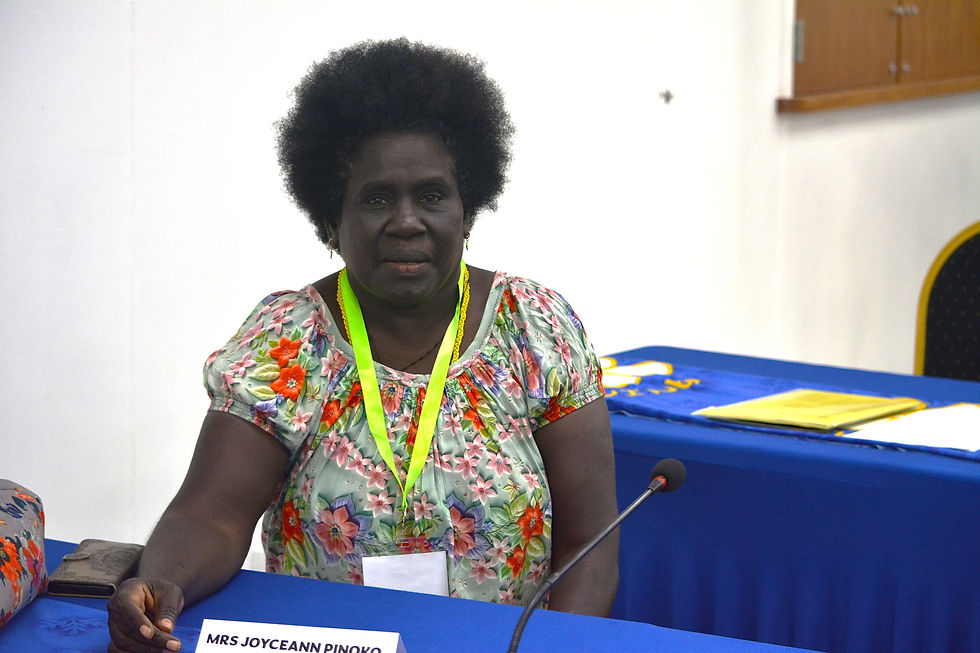
“Bougainville is predominantly Catholic. The Church has celebrated 125 years of faith because when the first Marist missionaries came, the first institutions they built were schools and hospitals, so that people could read the Gospel and live a better life,” Mrs. Pinoko said.
She noted that the foundation laid by the Society of Mary (Marists) continues to shape evangelization in Bougainville. Mrs. Pinoko also attributed collaboration with the Autonomous Bougainville Government Department of Education and its appointing authority to fostering both good management and discipline in schools. By diocesan policy, leadership positions in Catholic Agency Schools are reserved for Catholics, and Catholic identity is not an additional subject but the ethos of the schools: the daily Rosary in May and October, the daily Angelus, the Divine Mercy Chaplet at 3 p.m., especially on Fridays, the celebration of Holy Mass in all Catholic schools, and the quarterly Catholic Leaders Forum for all head teachers and principals.
“Teachers and communities, even those who are not Catholics, have no problem with the Catholic school system. They believe Catholic education and discipline are best for the future citizens of Bougainville,” she said.
Reaching the Last Mile
Of the 176 primary, high, secondary and vocational institutions, 61 are classified as remote — 31 extremely remote, 20 very remote and 10 remote. Most are primary schools.
These include atoll schools, island schools and mountain schools in the interior where, as Mrs. Pinoko observed, “after the crisis, the roads got bad.”
On Nissan Island, where all schools are Catholic Agency Schools, and on Carteret Atoll, with its three Catholic primary schools, the greatest challenge is not curriculum but access.
“We have our atoll islands, island schools… Nissan Island – that is where all the schools are – we have issues with transport. Because of the recent weather and people lost at sea, teachers were a bit reluctant to go there. This week the airstrip is now open again, so Mission Aviation Fellowship (MAF) will be flying in and out,” she explained.

In 2025, five primary schools — Tabago, Bogisago, Komaru, Ororoi and Sisivi — could not operate regularly due to adverse weather and the risk of being lost at sea, a challenge often shared by many remote communities in Papua New Guinea and the Solomon Islands.
Despite these challenges, monitoring continued. In the final quarter of 2025 alone, staff of the Catholic Education Agency conducted 15 monitoring visits — 10 to primary schools, one to a high school, two to secondary schools and two to vocational schools — to address staff welfare, school-community relations and school improvement.
Why Bougainville Still Comes to School
Paradoxically, the crisis that destroyed so much has made education more precious.
That hunger, Mrs. Pinoko said, is a fruit of the Church’s emphasis on education, an emphasis reiterated by the Local Ordinary, His Excellency, Most Rev. Dariusz Kałuża M.S.F., Bishop of Bougainville, in his homilies leading to the jubilee celebrations.
“When you care for your schools, your environment and share, you are a missionary,” Bishop Kałuża said.
In his homily for the 125th Jubilee celebration at Christ the King Parish, Hantoa, Bishop Kałuża reflected on the identity of the Catholic school:
“The Catholic schools should not only teach you how to be rich, but if you are rich, how to share your richness with others. The school should not teach you only how to be powerful, but how to serve. Not only how to be the best, but how to be brothers and sisters. The Catholic school should teach you something here, in your heart.”
“During the ten-year crisis, there was a big gap. Education was left out. Before that, Bougainville was one of the top provinces in the country. People have come to a stage where they really value education more than anything in Bougainville. Even those who missed out try to go through FODE [Flexible Open and Distance Education], and we have FODE centres and vocational schools everywhere,” Mrs. Pinoko said.
To support this mission, the Agency recently conducted three major in-service trainings: a School Learning Improvement Plan (SLIP) workshop for all high, secondary and TVET principals and Boards of Governors, and workshops on Financial Management and School Assessment for primary teachers in Bana District.
The work is carried out in partnership with the Autonomous Bougainville Government Department of Education, the Partnership for Improving Education (PIE) in collaboration with Divine Word University for joint monitoring and teacher upgrading, ChildFund for leadership and management training completed in all districts, and the Australia-PNG Law and Justice Partnership for new school-based awareness programmes being rolled out in 2026.
Jubilee: When Students Led the Church in prayer
As a member of the Jubilee preparation committee, Mrs. Pinoko coordinated the role of schools in the 125th Jubilee of the arrival of the Catholic faith in Bougainville – a moment that revealed that the Bougainville Church is school-birthed.

In three locations — South, Central and North — students led the liturgy: in Buin, at Pathu, the beach where the first missionaries landed; in Kieta, at Pokpok Island, where the first Mass was celebrated by Marist missionaries on 7 August 1901; and in Buka, at the main celebration, where Mrs. Pinoko and the Religious Education Coordinators awaited at the Jubilee Gate with students to welcome His Eminence Luis Antonio Cardinal Tagle, Pro-Prefect of the Dicastery for Evangelization and Special Envoy of His Holiness Pope Leo XIV.
“It was not just Catholic schools, even government schools came. It was a public holiday. We requested the department to release teachers and students… even other denominations came,” she said.
The Catholic Education Secretary of the Diocese of Bougainville message from the Jubilee has become her mission statement:
“We have to continue to strongly promote the Catholic identity in our schools. If we lose our Church identity, we lose ourselves. We must uphold Catholic teachings and continue to participate in Church programmes.”
A Matrilineal Church, a Humble formation
Mrs. Pinoko also reflected on Bougainville as a matrilineal society, where many heads of departments — including the Secretary and Deputy Secretary of Education — are women.“Bougainville, for the most part, is a matrilineal society… we have a lot of respect for our women. Women are respected. Our views are respected. You see women walking around at night, there is not much fear, not like here in Port Moresby.”
She attributes this respect for women to Marist formation: “How the Marists brought up these people (men from Bougainville) …it was in the ways of Mother Mary. In Humility and respect for women and mothers.”
It is that humility, she said, that sustains teachers who travel to atolls, head teachers who lead the Rosary in May, and a Church that continues to teach when roads are gone.

The Way Forward
Looking to 2026-2027 and beyond, the Catholic Education Agency has set three clear priorities:
1. Skills for Bougainville’s future: Encouraging students completing Grades 8, 10 and 12 to enrol in vocational and TVET schools. “We need technical people because BCL [Bougainville Copper Limited] is trying to start again. We do not want other people from other parts of the world to come and take our jobs.”
2. Pastoral care and discipline: Development of a Behaviour Management Policy and strengthened pastoral care and teacher formation to address cult activities and student behaviour, a need also flagged by the Ministry of Education.
3. Strengthening the Office: Restructuring of the Catholic Education Office to include appointment officers for each sector, and continued work towards a Divine Word University campus/centre to upgrade teachers locally.
From elementary classroom libraries to improve early-grade reading to flexible-mode upgrading of elementary teachers through Divine Word University, the focus remains the formation of the whole person.
“Education starts at home. Parents have to make sure children are taught Christian lives in the family, so that when they come to school they just carry on what they are taught. If we have good Christian families and communities, our schools will have a good learning environment for our children,” Mrs. Pinoko concluded.
In Bougainville, the school bell still rings with the Angelus. The Church still teaches. Despite remote seas and rugged mountains, Catholic education remains — because it was never only about schools. It was always about souls.
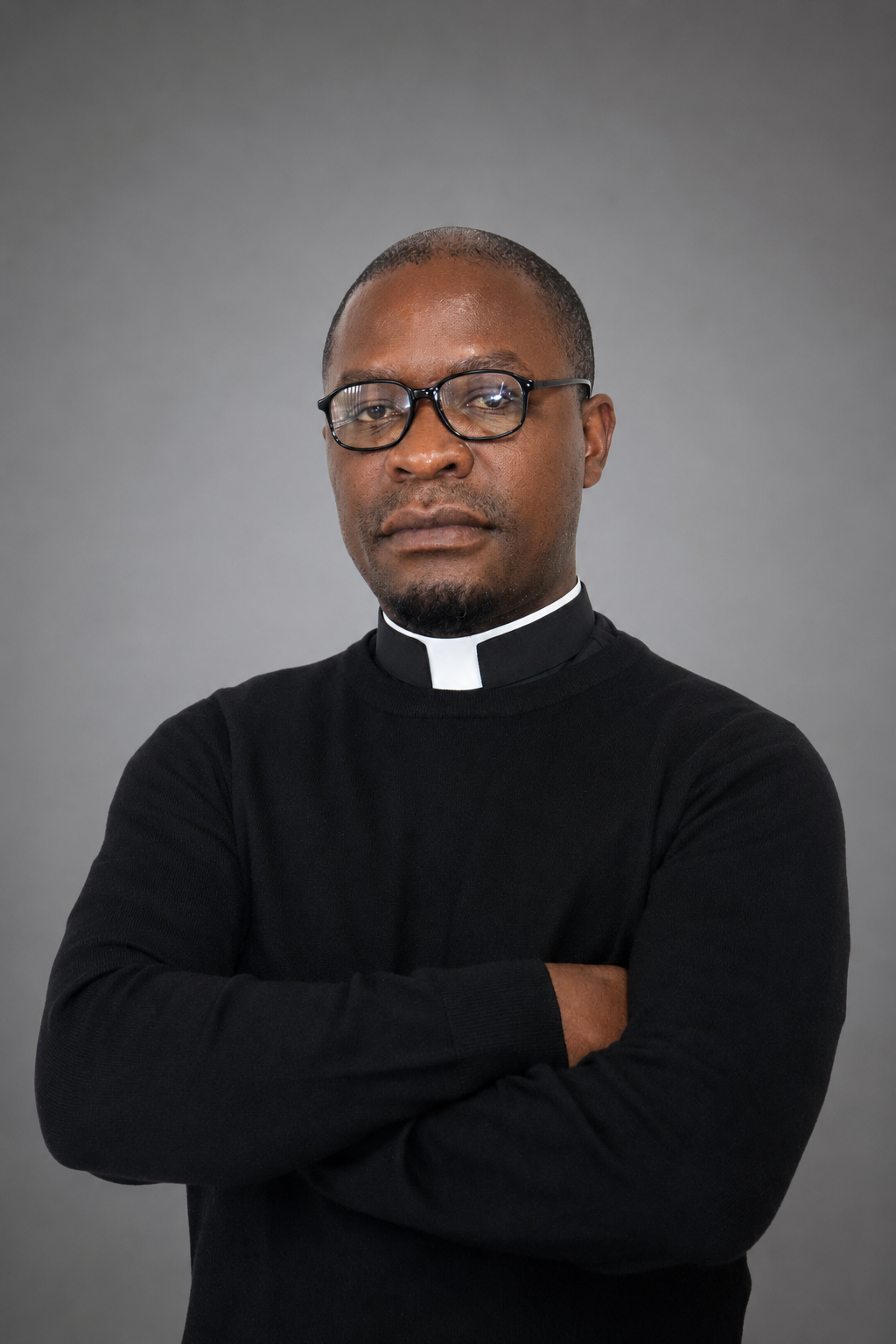
The reflections in this article are drawn from an interview conducted by Fr. Brian Nonde CMM with Mrs. Joyceanne Pinoko, Catholic Education Secretary of the Diocese of Bougainville, on the Catholic education, the growth of faith, and the 125th Jubilee celebrations.


Comments