


Building Safer Communities Through Faith, Formation and Action
MADANG – Community leaders, Church representatives and local volunteers from the five districts of Raicoast, Usino-Bundi-Gama, Madang, Sumkar and Bogia in Madang Province have successfully completed a three-day training program aimed at strengthening community-led responses to Sorcery Accusation Related Violence (SARV), Gender-Based Violence (GBV) and substance abuse.

Hosted by the Melanesian Institute, the training focused on equipping participants with practical knowledge and skills to identify, prevent and respond to violence within their communities through collaboration, human rights awareness and pastoral leadership.
The opening sessions introduced participants to the objectives of the program, emphasising the importance of creating safe spaces where survivors and vulnerable people are protected, respected and supported. Participants were also encouraged to strengthen partnerships within their communities while gaining a better understanding of the legal frameworks that safeguard victims and promote justice and accountability.
A central component of the training was the pastoral approach of See, Judge and Act, which guided participants in analysing community challenges, reflecting on their root causes and identifying practical actions that can be implemented at the grassroots level.
Using the theme "Community as a Garden," facilitators invited participants to see themselves as caretakers responsible for removing harmful behaviours and nurturing peaceful, healthy and life-giving communities. Rather than remaining bystanders, participants were encouraged to become advocates for peace, justice and reconciliation, embracing the Gospel values of compassion, service and respect for human dignity.
Interactive workshops provided participants with opportunities to identify emerging issues affecting their own communities. Through group discussions and presentations, they openly examined challenges such as SARV, GBV, substance abuse and other social concerns before developing practical, community-based responses.
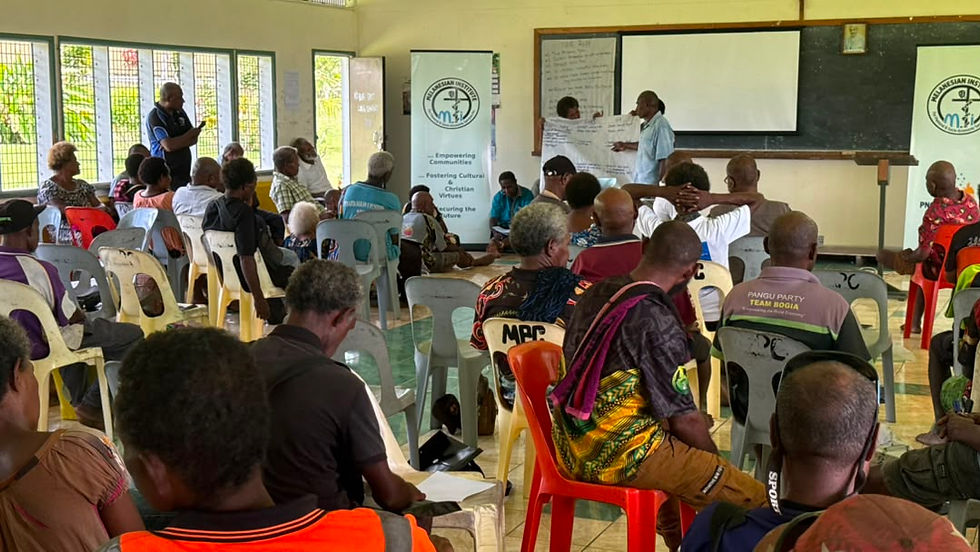
On the second day, participants deepened their understanding of the causes and impacts of SARV, GBV and substance abuse while learning about Papua New Guinea's legal framework and the consequences of criminal behaviour. The sessions reinforced the importance of prevention, early intervention and the shared responsibility of communities in upholding the rule of law and protecting vulnerable people.
Existing community volunteers also reflected on awareness activities they had carried out following previous training programs. They shared success stories, challenges and recommendations, providing valuable insights and practical learning opportunities for new participants preparing to undertake similar initiatives.
Evening film screenings complemented the training by reinforcing the key messages presented during the daytime sessions, encouraging further reflection and discussion among participants.
The program concluded with community presentations highlighting local achievements, lessons learned and future action plans. Organisers said the training had strengthened participants' confidence, deepened their commitment to community service and equipped them to work together in building safer, more peaceful and resilient communities through sustained grassroots action.


Comments