


Celebrating the Centenary of World Mission Sunday: "One in Christ - United in Mission"
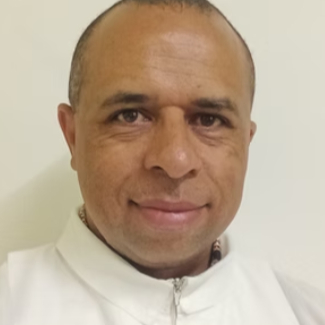

This article is a reflection on and application of the message for 100 Years of World Mission Sunday. It is authored by Fr. Dr. Christian Sieland, a Papua New Guinean Catholic priest who serves as the National Director of the Pontifical Mission Societies (PMS) for Papua New Guinea and the Solomon Islands.
October holds a special place in the life of the Catholic Church because it is universally recognised as Mission Month. It is a time to awaken in all of us the awareness that, through Baptism, every Christian is called to participate actively in the missionary mission of the Church. Throughout this month, we are invited to take steps of faith and missionary commitment, beginning with Holy Childhood Sunday and reaching a particular high point on World Mission Sunday, October 18, 2026.
During these weeks, the Church turns its attention to the great commission entrusted to us by Jesus Christ: to proclaim the Good News of the Gospel to all peoples.
This year (2026) marks a significant milestone: the Centenary of World Mission Sunday, established in 1926. One hundred years ago, Pope Pius XI instituted this special day through the Society for the Propagation of the Faith. Since then, Catholics throughout the world have united in prayer, solidarity, and financial support for the Church's missionary work.
For the Catholic communities of Papua New Guinea and the Solomon Islands, this centenary is not merely an opportunity to commemorate the past. It is a renewed and urgent call to embrace our missionary responsibility in the present and to look confidently towards the future.
Since our Church in PNG/SI is regarded as “mission territory”, we have benefitted directly from the collections of World Mission Sunday for many years through annual subsidies to our dioceses, for the formation of priests, sisters and lay leaders and also for more practical needs like building or maintaining churches, schools and health centers. But it is not just about financial support – it is about solidarity because the prayers and sacrifices of the faithful ensure that the light of Christ reaches all corners of the earth. Pope Leo XVI called it “a living sign of unity and ecclesial missionary communion”.
Every year, the Holy Father in Rome, with the suggestion of all PMS national directors around the world, chooses a theme to accompany the celebration of World Mission Sunday. For this centenary celebration, Pope Leo XIV has chosen the theme: “One in Christ, United in Mission.” The theme echoes the priestly prayer of Jesus in John 17:20–23, where He prayed that His followers “may all be one.”
These words remind us that mission begins with our relationship with Christ. Christian life is not simply a collection of rules, ideas, or religious practices; it is a living relationship with Jesus. We are called to remain united with Him, as branches remain connected to the vine. When we remain close to Christ, we are also drawn closer to one another. From this communion comes the strength and courage to share God's love with others.
Evangelisation is the natural fruit of this relationship. Our closeness to God should overflow into loving service of our neighbours. Through prayer, the Sacraments, and our life together as a Christian community, our unity becomes visible and practical. The divine life we receive enables ordinary Christians—in remote villages, rural communities, and urban parishes—to participate in the missionary work of the universal Church.
In Papua New Guinea, the theme “One in Christ” speaks directly to some of the challenges facing our society. Our nation is blessed with more than 800 languages, diverse cultures, and strong traditional identities. This diversity is a precious gift, but it can also become a source of division when our loyalties are placed above the common good.
One such challenge is the so-called wantok system, which can sometimes lead to favouritism, where family, clan, or language-group interests are placed above justice, honesty, responsible leadership, and the welfare of society as a whole. Very often, throughout PNG, regional rivalries, tribal conflicts, and unresolved grievances also destroy relationships, communities, and peace, often damaging our reputation as a “Christian country.
We sometimes speak proudly of being “wan kantri”, yet genuine unity requires more than a slogan. It requires a conversion of heart.
The Gospel calls us to cross these boundaries. To be “One in Christ” means that our deepest identity is not determined by clan, language, province, or tribe, but by our Baptism. Through Baptism, we become brothers and sisters in Christ, one family in Christ.
The Church must therefore be a visible sign of God's reconciliation and peace. It must demonstrate that people of different tribes, languages, cultures, and backgrounds can live together as one family under God.
A powerful example of how an ordinary Christian can live this missionary vocation is Saint Peter ToRot, the humble catechist, husband, layman and martyr from East New Britain.
His witness reminds us that mission is not the responsibility of priests and religious alone. Every baptised Christian has a missionary vocation. Saint Peter ToRot demonstrates that holiness, moral courage, and missionary leadership can emerge from within our own families and communities.
For many years, Papua New Guinea and the Solomon Islands have been described as “mission territories.” Today, however, we are at an important stage in our journey, transitioning from a primarily missionary Church to an increasingly local Church.
This transition presents several challenges and opportunities.
First, we must overcome a mentality of excessive dependence on overseas missionaries and financial assistance. The centenary challenges us to develop greater confidence in our own local vocation. We must strengthen our local clergy, religious communities, catechists, and lay leaders, while also preparing and sending our own missionaries to serve beyond our shores.
Second, we must strengthen the participation of the laity. Catechists, youth, church workers, and other lay faithful need formation, resources, and encouragement. Equipped properly, they can bring the Gospel into families, workplaces, villages, schools, public institutions, and wider society.
Third, we must deepen solidarity among dioceses and parishes. Mission cannot be the responsibility of a few communities. Through the Pontifical Mission Societies, every parish can contribute to the missionary work of the universal Church. Even a small and economically poor community has something valuable to offer.
Finally, we must respond courageously to violence and social division, including tribal fighting, sorcery accusation-related violence (SARV), and domestic violence. We cannot claim to be a Christian country if we continue to fight, hurt and kill each other. Christians are called to be “salt and light” by becoming peacemakers, rejecting revenge, healing divisions, and defending the dignity and sacredness of every human life.
Living the centenary theme requires the participation of the whole Church.
Families must become the first schools of mission. Parents have the responsibility to create homes where prayer, forgiveness, hospitality, respect, and reconciliation are practised. Children should learn from an early age that Christian identity transcends tribal and cultural divisions.
Catechists must also receive the formation, spiritual support, and practical assistance they need. In many remote communities across our islands, catechists are the backbone of the Church. Their faithful service makes the presence of the Gospel possible in places where priests and religious cannot always be present.
Priests, religious sisters, and brothers likewise provide an important witness to unity. Religious communities in which people of different cultures and nationalities live and serve together demonstrate that the Gospel has the power to overcome human divisions.
Finally, every Catholic is called to participate through prayer, sacrifice, and generosity. On World Mission Sunday, everyone—even those with very limited resources—is invited to offer something for the spread of the Gospel and the support of missionary communities throughout the world.
As we celebrate 100 years of World Mission Sunday on October 18, 2026, let us give thanks for the missionary witness of those who have gone before us and renew our own commitment to Christ.
With the intercession of Mary, Stella Maris and Queen of the Missions, and inspired by the courageous witness of Saint Peter ToRot, may we move beyond tribal and regional divisions and recognise one another as brothers and sisters in Christ.
May the Catholic Church in Papua New Guinea and the Solomon Islands continue to grow as a truly missionary Church—united in faith, generous in service, committed to peace, and courageous in proclaiming the Gospel.
One in Christ, United in Mission.


Comments