


Catholic Education Secretaries Inducted as Charging Officers to Uphold Justice, Mercy and Professional Standards
Updated: Sep 1
Annual Workshop Opens at CBC Centre, Waigani
PORT MORESBY, 31 August 2026 (CBC PNGSI) — The Catholic Education Secretaries Annual Workshop 2026 opened today at the Catholic Bishops Conference Centre at Waigani with a call to exercise disciplinary authority with justice, mercy and pastoral integrity.

The three-day workshop, held from 31st August to 3rd September, is convened in partnership with the National Catholic Education Commission, the National Department of Education – Teaching Service Commission (TSC), Caritas PNG and the Building Community Engagement Partners (BCEP).
The workshop brings together Catholic Education Secretaries from all dioceses across Papua New Guinea to be trained and formally inducted as Charging Officers within the National Education System.
A Statutory and Moral Safeguarding Mechanism
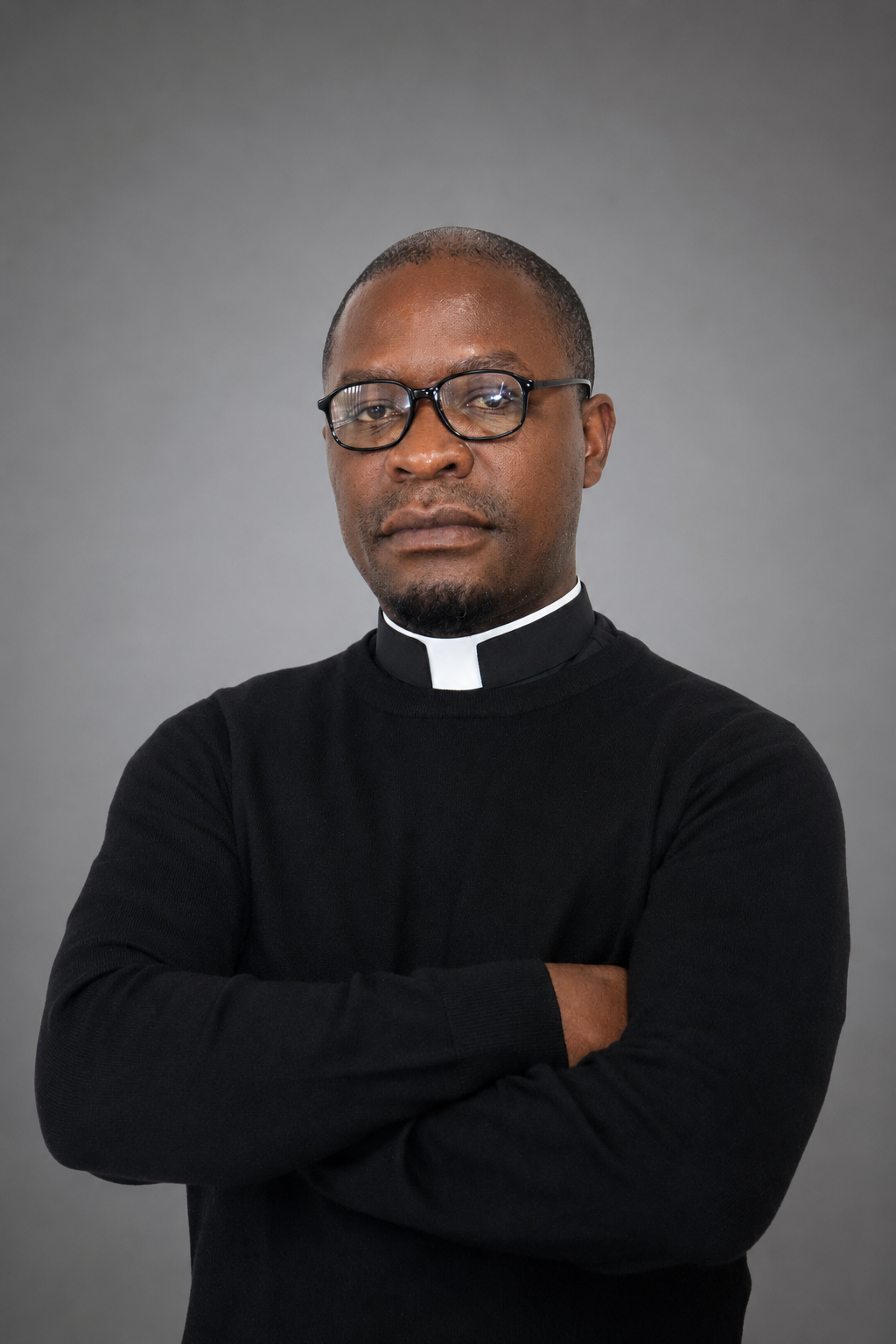
In his opening address, the General Secretary of the Catholic Bishops Conference, Rev. Fr. Lawrence Arockiaraj, welcomed participants and underscored the gravity of their new mandate.
He reminded Secretaries that the role of Charging Officer extends far beyond administration. “Under the Constitution, Charging Officers hold a statutory, legally empowered responsibility to investigate allegations of misconduct and lay formal charges against teachers. This is not merely an administrative task. It is a serious, judicial and moral safeguarding mechanism,” Fr. Lawrence said.
He stressed that the disciplinary process must protect both students and teachers, ensuring fair hearings in strict accordance with TSC Regulations.
“Our teachers are our greatest resource. But when misconduct threatens the sanctity of the classroom, we must address it not with hesitation or personal bias, but with professional, legally sound and Gospel-centred protocols,” he said.
Quoting the Prophet Micah, he urged the Secretaries to ground their work in Scripture:
“He has shown you, O mortal, what is good. And what does the Lord require of you? To act justly and to love mercy and to walk humbly with your God.” – Micah 6:8
“We must investigate thoroughly without bias, ensuring that truth is always upheld. Our disciplinary process must never be driven by malice or personal issues, but by a desire for restoration, fairness and the protection of the vulnerable. When we maintain discipline in our schools, we are protecting the children of Papua New Guinea and ensuring that our schools remain places where the Gospel is not only taught, but lived.”
Formation, Not Just Information: The Need for Presence and Motivation
Bishop Pedro Baquero, SDB, Bishop Deputy for the National Catholic Education Commission, thanked the Secretaries for their sacrifice and service, insisting that every workshop must offer formation as well as information.

Reflecting on his own experience as a young principal in Araimiri, Gulf Province, Bishop Baquero recalled how good inspectors were not policemen, but fathers who guided him while demanding high standards.
He identified the core crisis in education in Papua New Guinea not as curriculum or infrastructure, but attitude. “We have no problem with curriculum. We have no problem with infrastructure. There are funds that help us build. We have teachers who are qualified. But how is it that education in our country is struggling to be effective? For me, the main issue is attitudinal, motivational,” Bishop Baquero said.
He challenged the Secretaries to lead through presence and listening.
“First of all, presence. Be present in your schools. Make sure that the whole year you are able to visit every corner of that diocese. Be present and not just be present, but establish a good relationship with them.” “As Education Secretaries, you must learn how to listen. Do not just make assessment. Listen first. Each of your teachers, each of your head teachers, will have their own story,” he added.
He reminded them of their ecclesial responsibility. “Remember, you are the technical officers of your bishops. We rely on you to know the Education Act, to know the Teaching Service Act, because you will advise the bishops what to do and how to do it.”
“For us Catholics, effective learning and effective teaching is not just getting high marks. Our standard is deeper. It is about the proclamation of the Gospel, that our young people may be safe, that they will achieve holiness, and that we contribute to the Christianization of our country.”

TSC: Discipline Must Follow the Law
The Chairman of the Teaching Service Commission, Mr. Maini Mike Ugaia, acknowledged the historic contribution of the Catholic Church as architects and pioneers of formal education in Papua New Guinea from the 19th century, long before the unified national education system in 1970.
He briefed the Secretaries on current TSC reforms, including decentralization from Waigani to all provinces and soon to districts, to ensure teachers’ issues are resolved locally and children are not left without teachers.
“We have more than 74,000 teachers today, making the teaching service one of the largest workforces in Papua New Guinea. You multiply the disciplined forces – police, CIS, Defence – they have 11,000. You and I manage the biggest workforce in this country. We are the ones who build it or break it,” Mr. Ugaia said.
Clarifying the relationship between the State and Church agencies since 1st July 1970, he said: “The teachers in our schools, I am their father, and I own all of them. You only administer and take care of them while they are serving in the schools.”
On the purpose of the training, he issued a strong legal reminder: “There are two important things that happen to teachers. One is discipline, and the other is appointment. These two have their own destiny and their own runway. What happens with discipline affects appointment.”
“TSC has delegated, among other functions, charging is one of them. Delegation means that function belongs to the Commission. So any delivery of that function, a report has to be written to the one that delegated it.”
He outlined two fundamental duties of a Charging Officer: to correctly understand and establish the offence, which remains an allegation yet to be proven, and to understand and correctly follow the disciplinary procedures.
“A disciplinary action can be challenged if proper procedures have not been followed. In a court of law, procedural errors can have serious consequences, regardless of how serious an allegation may appear. If the process has not been properly followed, a case may fail. All our efforts will go down the drain,” he cautioned.
He further reminded Secretaries that their authority is territorial – a Secretary for Central Province exercises charging powers only within Central Province, and likewise for all provinces.

Intent, Sense and Spirit: Justice Tempered with Mercy
The Secretary for the National Department of Education, Mr Paul Ainiu, described the induction as a profound leadership call, not a mere title. “You have been called and mandated to step into the role of a Charging Officer. You will join the TSC advisors and school inspectors as guardians of our professional standards and protectors of our students’ learning environments. You are the custodians of our teachers’ professional integrity,” Mr Paul Ainiu said.
He unpacked the 2019 TSC Revised Disciplinary Policy and Procedures Manual into three pillars:
1. The Intent – The WHY: “The intent of this manual is not to hunt for mistakes or to blindly punish. Its intent is to establish a clear, fair and legally sound framework that protects the integrity of the teaching profession.”
2. The Sense – The WHAT: “The sense of the manual is due process and natural justice. It provides a step-by-step procedural roadmap that protects both the teacher’s rights and the system’s integrity.”
3. The Spirit – The HOW: “The spirit of this manual is healing, curative and restorative accountability. Discipline at its core means to teach or to guide. It aims to rehabilitate and guide teachers back to their professional best whenever possible.”
For Catholic Education Secretaries, he said, the challenge is to marry system rules with agency ethos. “You must blend the secular procedural requirements of the TSC with the pastoral, value-driven ethos of Catholic education. Discipline must always respect human dignity. When you apply these procedures, you are not just ticking boxes on a government form, you are exercising pastoral leadership.”
“Following TSC procedures does not compromise your Catholic identity. It actually reinforces your commitment to fairness and moral integrity.”
Mr Paul Ainiu stressed partnership over working in silos. “None of us can do this work in isolation. When Catholic Education Secretaries as Charging Officers and TSC advisors and inspectors work in silos, discipline falls apart. Cases are thrown out on technicalities and schools suffer. When we work closely together, we create an unbreakable safety net for our schools.”

He concluded with a call to courage:
“Stepping into the role of Charging Officer requires courage – the courage to have difficult conversations, the courage to hold your peers accountable, the courage to stand up for justice and fairness, and the courage to stand up for the standards of the teaching service and the identity of Catholic schools.”
“Every time you apply this manual with integrity, you are fighting for the students. You are ensuring that the classroom remains a sacred space of learning and growth.”
The workshop includes technical sessions facilitated by TSC Legal Officers on investigative procedures, evidence collection, natural justice and the step-by-step process of laying formal charges under the Teaching Service Act.


Comments